Here are top tax tips to tidy up savings, ISAs, pensions and gains before April. It's a friendly run-through of what people miss and how to fix it. Think of it as a quick chat that could save real money ...
Top tax tips to save, Track expenses, deductions, Maximize returns
The tax year-end has a habit of arriving faster than expected, and the top tax tips that matter most are usually the simple ones people assume don't apply to them. A sensible starting point is to treat the next few weeks like a quick systems check: what is taxed, what could be sheltered, and what paperwork needs to be done before HMRC deadlines remove the option.
Surprisingly, many individuals assume savings interest is automatically tax-free, when in reality it is only tax-free up to certain limits and only for certain taxpayers. Once interest rates rose, that “it won't affect me” assumption stopped being safe, so a rational move is to look at how much interest has been earned and whether a cash ISA (or even a stocks and shares ISA for longer horizons) would ring-fence future interest from tax.
An ISA allowance is also brutally time-limited, and the logic is straightforward: unused capacity cannot be reclaimed later. When people do not use their ISA allowance, they expose future growth to tax without gaining anything in return.
Pensions are where a small late decision can produce a disproportionate impact, because tax relief effectively discounts the cost of saving. For many, a year-end contribution is not just retirement planning; it is self-assessment planning in disguise, especially if it shifts taxable income away from awkward thresholds.
Capital Gains Tax has become easier to stumble into because the annual exempt amount is now modest, so even 'small' portfolios can generate a tax bill. A disciplined investor will check unrealised gains outside wrappers and decide whether crystallising part of a gain before April makes sense, particularly if the proceeds can be moved into an ISA to keep future growth sheltered.
Dividends also catch people out because the allowance is tight, and dividend income can quietly arrive even when no one feels like they are 'an investor'. If a portfolio outside an ISA throws off dividends, those payments can become taxable sooner than expected, and next year's rates may not be kinder.
Frozen thresholds create the most frustrating kind of tax. It can feel like a pay rise made someone worse off. That is why checking total income before April is more than curiosity; it is defensive planning around tax allowances, benefit taper points, and cliff edges that can wipe out childcare support.
Households that treat money as 'his and hers' can end up paying more than necessary, simply because allowances and tax bands are personal. If one partner pays a higher rate and the other has spare headroom, moving taxable savings or investments into the lower earner's name can reduce the overall drag, provided ownership matches reality and records are clean.
A Junior ISA can shelter savings or investments until adulthood, and a Junior SIPP can be an ultra-long-term play that also attracts tax relief, even though access is far away. For families who can afford it, automating modest monthly contributions works better than attempting heroic lump sums at the last minute.
Inheritance tax planning is often postponed because it feels like a 'later life' topic, but annual gifting allowances are time-sensitive and easy to waste. Small gifts made deliberately, documented properly, and kept within affordability can reduce a future estate while keeping the donor comfortable.
Finally, the most expensive mistake is turning March into a yearly panic. A smart approach is to build a simple checklist around HMRC deadlines, automate ISA investing and pension contributions, and review taxable income periodically so self-assessment planning is a steady process rather than a scramble.
Even for owners and contractors who need business tax tips alongside personal planning, the principle is the same: decisions made early preserve options, while decisions made late simply accept whatever tax happens by default.
Remember, these top tax tips only work when they are actually used.
If anything I've written in my blog post resonates with you and you'd like to discover more of my thoughts about these top tax tips and how I can help you minimise your tax and maximise your wealth through good tax planning, then do feel free to call me on 07434 287603 and let's see how I can help you.
Helen brings the personal tax planning experience of the top 20 tax companies to Essendon. Formerly of MacIntyre Hudson (with 45 offices nationwide), Helen worked at Chancery for more than 10 years before joining Essendon as the personal tax specialist.
Tax Planning can make a considerable difference to your tax liability. Helen has specialist knowledge and experience in tax planning and uses every opportunity to minimise your tax bill is utilised. By analysing your investments, income, profit and expenditures, Helen will provide strategic tax planning expertise that could offer significant savings, whilst delivering clear, honest advice and guidance.
When Helen is not at Essendon she spends time with her young son and likes going on long walks with the family dog.
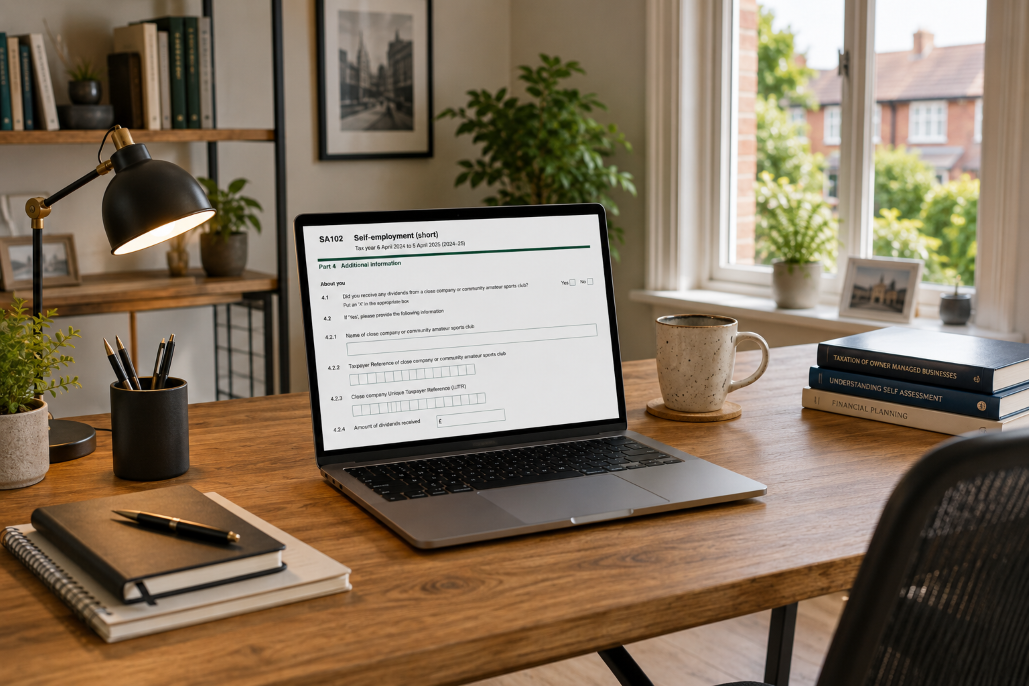
Dividend disclosures on the new SA102 boxes can feel fiddly at first, but the key point is simple. If the person is a director of one close company, the reporting follows that company, not every company in which they happen t...
A few sensible moves can help someone reduce Capital Gains Tax without taking risks. Using the capital gains allowance, sheltering investments in ISAs or pensions, and planning sales carefully all matter. It is practical tax ...
HMRC's new data sharing initiative, which aligns with the OECD's global objective to tackle tax evasion, has been met with mixed reactions from online sellers ......
What documents do executors need? In short, the papers that prove identity, assets, liabilities and family links matter most. Good records make probate application documents easier to prepare, reduce delays and help executors...
Zero-Hours Contracts are not being banned, but they are being tightened dramatically. The direction of travel is clearer pay, more notice, and fewer surprises for workers. UK employers should start thinking now about how they...
Splitting a business to avoid VAT may look clever, but it often isn't. HMRC can join entities together where links exist and challenge the arrangement. Consider contracts, commercial reality, and long-term costs before acting...
This summer's VAT complexity is not just about cheaper tickets and meals. It also brings fresh admin, tricky boundaries, and significant VAT compliance work for businesses. A small saving for families, perhaps, but a big exer...
The salary sacrifice cap sounds as though it is aimed at high earners, but the detail creates a middle-income trap for everyday savers and SMEs. Below £2,000, the system still works well; above that, NI costs, payroll pressur...
Late last year, I read an article in The Guardian about Joyce Vincent, a woman who died alone in her London flat and wasn't discovered for more than t ...
Finding the right serviced accommodation in Milton Keynes can make all the difference to a successful project. Whether you're on a short-term contract ...
Have you ever stopped to think about the difference you want to make in the world? For some people, that means tackling global challenges, changing li ...
As the next budget approaches, speculation about tax changes is gaining momentum. The Chancellor faces a difficult balancing act: managing public fina ...
All content on this blog, including but not limited to text, images, videos and audio, is protected by copyright. No part of this blog may be reproduced, copied, distributed, or otherwise used without the prior written consent of the author. Unauthorised use constitutes a breach of intellectual property rights.
Please note that many elements of this blog have been created using Artificial Intelligence (AI). As such, content may not always reflect verified facts or professional advice. The information provided is for general interest only and should not be relied upon as a sole source for making decisions, financial or otherwise. Readers are strongly advised to seek independent advice from qualified professionals appropriate to their country and situation.
The author of this blog, YourPCM Limited, and its directors, employees, and authorised agents accept no liability for any loss, harm, or consequence arising from the use or interpretation of content found on this site.
The sblogit.com platform is provided on an “as is” basis. By continuing to view or interact with this blog, you acknowledge and accept these terms. If you do not agree with any part of this notice, please cease using this site immediately.
YourPCM Limited is a company registered in the UK and operates exclusively under the jurisdiction of the laws of England and Wales.