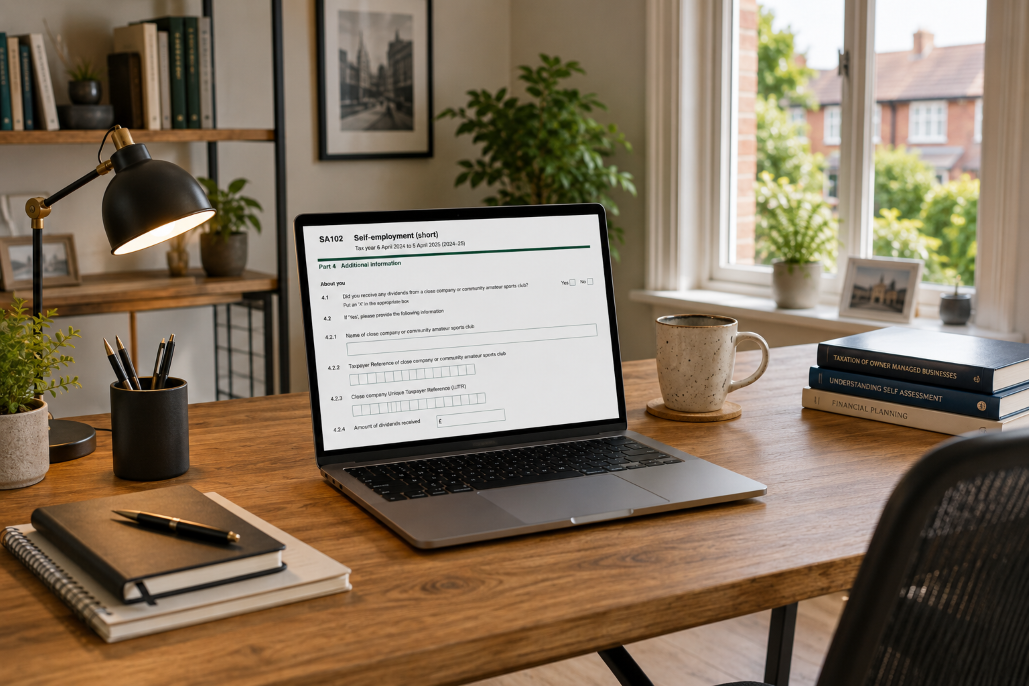
New Year Nudge: Beat the self-assessment filing deadline without stress
Here's the simple reality of the self-assessment filing deadline: it doesn't move, but your stress can. My blog post this week explains why filing early helps, what HMRC charges for delays, and how an online tax return can keep things tidy. Get it done, then get on with your year ... Self-assessment filing deadline, Ticking clock, papers pile high, Deep breath, taxes done January has a way of making life feel fresh and organised, right up until the self-assessment filing deadline starts staring back from the calendar. The deadline is fixed, the rules are familiar, and yet thousands still end up filing in the final days, sometimes even the final hour. It is not that people enjoy last-minute pressure; it is that tax admin rarely feels urgent until it becomes unavoidable!This year's pattern looks much the same: millions have already submitted, but a sizable group still has their self-assessment to finish. HMRC even sees a burst of activity over the New Year period, when some taxpayers choose to spend the celebrations tying up loose ends rather than carrying them into January. That behaviour may sound overly disciplined, but it is also quietly rational: filing early buys options, whether that means time to check figures, time to find missing paperwork, or time to ask for help without competing with everyone else doing the same. The best reason to treat the self-assessment filing deadline as a practical project rather than a looming threat is that late filing penalties are deliberately designed to escalate. The system starts with a fixed charge even when there is no tax due, then adds daily penalties once a return is three months late, and later layers on further charges based on either a percentage of the tax owed or a minimum amount. The logic is straightforward: a short delay costs, but a longer delay costs far more, and it becomes expensive in ways that feel avoidable in hindsight.It also helps to separate filing from paying, because they are linked but not identical. A taxpayer can submit the return and still need time to organise payment, and conversely, someone can pay an estimate but still be penalised if the return is missing. HMRC can apply extra charges for late payment at set points after the deadline, and interest can run on unpaid balances as well. In other words, the administrative part matters just as much as the cashflow part, and both benefit from an earlier start. For many, an online tax return is the least painful route, not because it is glamorous, but because it is structured.The prompts reduce the chance of forgetting common sections, the calculations are automated, and the submission is confirmed immediately. That confirmation is useful psychologically too: once it is done, it is done, and attention can return to work, family, or anything else that deserves January's energy more than chasing receipts. A sensible approach is to aim for clarity rather than perfection at the outset. The taxpayer can gather the obvious income details, then methodically fill gaps such as bank interest, dividends, pension contributions, or allowable expenses, depending on their situation. If anything is complex, it is often faster to ring-fence it early, get advice, and prevent it from becoming the single unresolved item that pushes everything into a last-minute rush. That is strategic thinking applied to paperwork: reduce uncertainty early, then execute. It is also worth remembering that the highest cost of missing the self-assessment filing deadline is not only financial!Stress is a real tax, and it tends to arrive at the exact moment people have the least capacity for it. Filing well before the deadline avoids the scramble, reduces the risk of avoidable errors, and keeps the focus on building the year ahead rather than repairing the month behind. By the time the end of January arrives, most people would rather feel finished than frantic, and that is exactly what meeting the self-assessment filing deadline delivers. A completed self-assessment, submitted through an online tax return, means fewer surprises, fewer what-ifs, and far less exposure to late filing penalties. This year's return does not have to follow you into February. Until next time ...
| ||||||||||||||||||||||||||||||||||||||||||||||||||||||||||||||||||||||||||||||||||||||

 | Essendon Tax Independent tax consultants ... |