
+44 (0) 1908 774323
   
Helen Beaumont

Essendon Tax

Independent tax consultants ...

Do I need to file a self-assessment tax return?

Helen Beaumont

CREATED BY HELEN BEAUMONT

Published: 17/12/2025 @ 09:00AM

#file a self assessment tax return #SelfAssessment #HMRC #UKTax #TaxReturnDeadline #SelfEmployedTax

Unsure if you must file a self-assessment tax return? This guide explains who needs to file, what income triggers it, and how to register with HMRC. Get clear before the tax return deadline ...

File a self assessment tax return, Crunching numbers tight, Owed or refunded

File a self assessment tax return, Crunching numbers tight, Owed or refunded

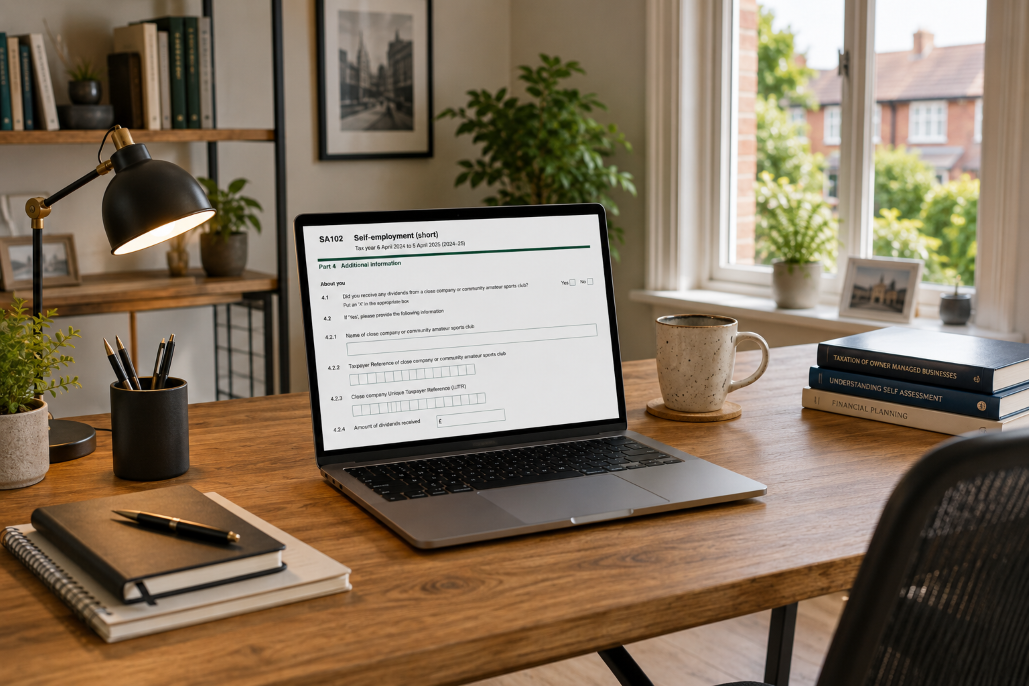
Many people wonder each year whether they need to file a self-assessment tax return, especially if there have been changes, such as starting a side hustle, receiving dividends, or earning rental income. The system relies on individuals understanding their position, so they should calmly assess their income sources.

Then you can decide whether registration
with HMRC is required!

A self-employed person, even part-time, should consider the £1,000 trading allowance carefully because it applies to gross income before expenses. If total takings from self-employed tax activities reach or exceed that figure within the tax year, the activity usually sits within self-assessment and belongs on a tax return. Where there is partnership income, the obligation is clear: partners are within the regime and should expect to file.

Someone with other untaxed income should pause and tally the amounts:

  • Interest,
  • Dividends,
  • Foreign income,
  • Property rental.

Often slip past PAYE and therefore prompt a need to file.

The same goes for capital gains: selling shares, a second home or valuable assets may require reporting even if no tax is ultimately due, whereas cars, a main residence and many items under £6,000 are commonly outside the charge.

Families claiming Child Benefit should take a look at the High Income Child Benefit Charge. If the higher earner's income exceeds £60,000 for tax years ending in 2024 and 2025, an adjustment may arise and, where not collected through a tax code, a tax return becomes the mechanism to settle it with HMRC. This is a classic instance of who needs to file changing from one year to the next.

Some people choose to file a claim for relief
that would otherwise be missed!

Gift Aid carry-back, marriage allowance transfers, and certain investment reliefs often need the self-assessment route to crystallise the benefit. Others file to pay voluntary National Insurance to protect state pension years, or to verify that PAYE deductions match their P60 and P11D figures, especially after job changes or benefits updates.

Registration timing matters because a late start compresses the run-up to the tax return deadline. If the obligation arises in a tax year, notifying HMRC by the 5th of October following the end of that tax year is prudent; they will issue a UTR so an online account can be set up. Electronic filing is the norm, with paper returns reserved for exceptional cases only.

Careful record-keeping reduces stress. Bank statements, dividend vouchers, rental statements, invoices and expense records help ensure the tax return reflects reality. When a repayment is due, it no longer lands automatically in a bank account, so the taxpayer must request it after filing, or opt, if eligible and timely, for collection or adjustment via PAYE in the next year.

Clarity often arrives by testing scenarios against HMRC's online checker, though it may not handle every nuance. Where affairs are complex, especially approaching Making Tax Digital for Income Tax from April 2026, a brief conversation with a tax specialist such as myself can prevent errors and penalties. This is particularly sensible for landlords, multiple income streams, or frequent capital disposals.

The simplest way to decide who needs to file is to map all income sources, identify anything untaxed or partially taxed, and compare against the thresholds and triggers above.Those with only employment income taxed fully through PAYE and total income below the personal allowance may not need to file, but anyone with side income, gains, or specific relief claims often will.

Prompt action leaves time to gather data and
avoid last‑minute scrambles!

As the 31st of January online tax return deadline approaches, the calm approach is to assess obligations early, register where needed, and keep records tidy so the process feels predictable rather than pressured.

If in doubt, use the official checker, read HMRC guidance, or seek advice, and remember that choosing to file a self-assessment tax return can sometimes be the cleanest way to get things right.

Until next time ...


HELEN BEAUMONT
Join my mailing list! Click here and be one of the first to know when I publish a new blog post!

Would you like to know more?

If anything I've written in my blog post resonates with you and you'd like to discover more of my thoughts about whether you need to file a self-assessment tax return, then do feel free to call me on 07434 287603 and let's see how I can help you.

Share the blog love ...

Share this to FacebookBuffer
Share this to FacebookFacebook
Share this to TwitterTwitter
Share this to Linkedin (popup window)Linkedin
Share this to Pinterest (popup window)Pinterest
Share this to WhatsApp (popup window)WhatsApp

#file a self assessment tax return #SelfAssessment #HMRC #UKTax #TaxReturnDeadline #SelfEmployedTax

About Helen Beaumont ...

Helen Beaumont 
Helen brings the personal tax planning experience of the top 20 tax companies to Essendon. Formerly of MacIntyre Hudson (with 45 offices nationwide), Helen worked at Chancery for more than 10 years before joining Essendon as the personal tax specialist.

Tax Planning can make a considerable difference to your tax liability. Helen has specialist knowledge and experience in tax planning and uses every opportunity to minimise your tax bill is utilised. By analysing your investments, income, profit and expenditures, Helen will provide strategic tax planning expertise that could offer significant savings, whilst delivering clear, honest advice and guidance.

When Helen is not at Essendon she spends time with her young son and likes going on long walks with the family dog.

More blog posts for you to enjoy ...

Click here to view this blog post


Salary sacrifice changes set to hit millions of UK employees

Salary sacrifice changes will cap tax-free pension contributions at £2,000 from April 2029. Many employees and employers will face higher costs and new admin. Here's what's changing, who's affected, and how to prepare ......

Click here to view this blog post


Nine ways to beat the Budget tax burden this year

Here's my smart, simple guide to beat the Budget tax burden without drama. I'll cover pensions, ISAs, dividends, cash, IHT and more. Read this to prioritise your tax savings and plan ahead with calm planning ......

Click here to view this blog post


Why splitting a business to avoid VAT can backfire badly

Splitting a business to avoid VAT may look clever, but it often isn't. HMRC can join entities together where links exist and challenge the arrangement. Consider contracts, commercial reality, and long-term costs before acting...

Click here to view this blog post


How HMRC Christmas tax rules trip up festive side hustlers

HMRC Christmas tax rules often surprise side hustlers each December. Here's what counts, what doesn't, and when to register. Stay compliant and keep more of your Christmas earnings ......

Click here to view this blog post


Chancellor eyes pension salary sacrifice: a £5.1bn question

Rumours in the media suggest the Chancellor may curb pension salary sacrifice in the Autumn Budget. Employers, employees, and HMRC see risks to take-home pay and saving habits. Here's what could really happen ......

Click here to view this blog post


Why farmers need an inheritance tax transitional gifting rule now

Older farmers face a cliff edge in April 2026. An inheritance tax transitional gifting rule could ease pressure and protect family businesses. Here's why it matters and what should happen next ......

Click here to view this blog post


Inheritance Tax risk for family-owned businesses: act before reliefs shrink!

Here's the lowdown on Inheritance Tax risk for family-owned businesses and why time matters. Reliefs are tightening, and proactive planning can save millions. Start now to secure business succession and family wealth ......

Click here to view this blog post


A pension tax raid would put the NHS in danger

A pension tax raid risks driving GPs to retire early and undermining new neighbourhood care plans. It could also destabilise NHS funding and deepen workforce gaps. Clarity on tax reforms is urgently needed, especially with th...

Other bloggers you may like ...

Click here to view this blog post


What landlords need to know about rent increases in 2026

Posted by Sarah Hannaford on https://blog.sarahpasolutions.co.uk

Here's the lowdown on rent Increases in 2026 and what they mean day to day. Expect annual limits, longer notice, and clearer tenant rights. A Virtual ...

Click here to view this blog post


The art of saying thank you in a festive, yet growth-minded way

Posted by Jacky Sherman on https://www.jackysherman.com

Here's a fresh look at saying thank you as a strategic habit. It's festive, human, and surprisingly profitable. Make gratitude your consultancy's quie ...

Click here to view this blog post


Popup vs embedded chatbots: choosing the right layout for your website

Posted by Steffi Lewis on https://www.yourbot.uk

This blog post looks at the differences between the usual popup chatbots and an embedded version. It's all about what you need your chatbot to do and ...

Click here to view this blog post


The Importance Of Being Earnest

Posted by Pritesh Ganatra on https://blog.btsuk.net

I still believe in the notion that 'people buy from people', however, we seem to be in a world where people are being pressured into buying technology ...

Click here to discover sBlogIt! The done-for-you blogging service