
+44 (0) 1908 774323
   
Helen Beaumont

Essendon Tax

Independent tax consultants ...

Tax return changes put extra pressure on company directors

Helen Beaumont

CREATED BY HELEN BEAUMONT

Published: 13/05/2026 @ 09:00AM

#TaxReturnChanges #CompanyDirectors #Shareholdings #CloseCompanies #SelfAssessment #HMRCInvestigations

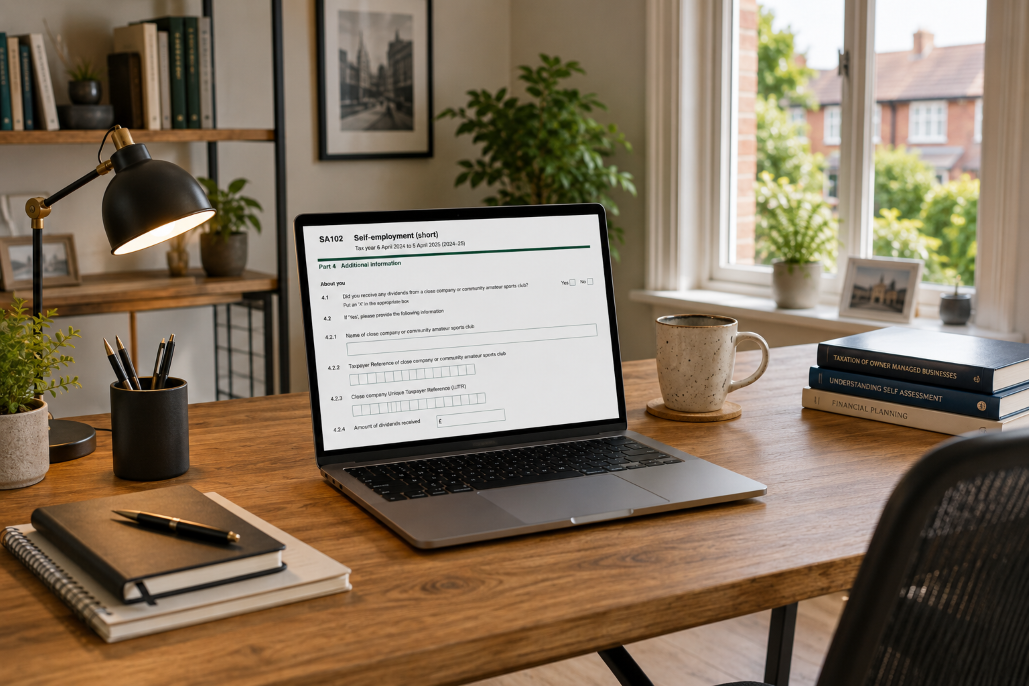
Tax return changes are introducing a new admin for company directors, particularly regarding shareholdings and close companies. The rules do not force everyone into self-assessment, but they do make existing returns more detailed ...

Tax return changes have increased the burden on company directors, adding extra pressure to their already demanding roles

Tax return changes have increased the burden on company directors, adding extra pressure to their already demanding roles

These changes are adding a fresh layer of pressure for company directors, and the added detail is more than a simple form-filling tweak. For many, the issue is not the tax bill itself but the need to gather accurate information on directorships, shareholdings and dividends before the return is filed.

The new requirements sit within the existing
self-assessment changes framework!

This means they affect only those who already need to file a return. That will reassure some company directors, but it should not encourage complacency. When HMRC requests more detail, the director's responsibilities become harder to ignore, particularly in close companies.

One of the more awkward points concerns the shareholding percentage. In straightforward cases, the answer is obvious, but many private businesses do not have simple share structures.

Different share classes, varying nominal values, and family ownership arrangements can all make the calculation less intuitive than it first appears. These tax return changes have therefore turned what once felt like background information into something that requires proper attention.

Figures are not limited to the tax year's end; ownership changes during the year require reporting the highest percentage held at any time. This may differ from the 5th April position but aligns with HMRC expectations. Company directors need clear records of share transactions, not just current holdings.

There is also a trap in the zero boxes!

If a director did not receive a dividend from a close company or held no shares, the answer should still be entered as zero, not left blank. That distinction may seem minor, but in compliance terms, it is anything but. A missing entry can lead to unnecessary follow-up and, in the wrong circumstances, could even contribute to HMRC investigations.

The wider point is that these tax return changes do not introduce a brand-new obligation to file for every director, but they do make existing filings more demanding.

That is why the sensible approach is to collect the information early, check the company's status, and review the share register before the return deadline approaches. It is a small investment of time that can save a great deal of stress later.

For company directors, this is a good moment to treat director responsibilities with a little more formality than before. The rules may be technical, but the practical message is simple: get the facts straight, complete every relevant box, and do not assume that old habits will be enough.

With these tax return changes in effect, accuracy is now essential for safety.

Until next time ...


HELEN BEAUMONT
Join my mailing list! Click here and be one of the first to know when I publish a new blog post!

Would you like to know more?

If anything I've written in my blog post resonates with you and you'd like to discover more of my thoughts about these recent tax return changes, then do feel free to call me on 07434 287603 and let's see how I can help you.

Share the blog love ...

Share this to FacebookBuffer
Share this to FacebookFacebook
Share this to TwitterTwitter
Share this to Linkedin (popup window)Linkedin
Share this to Pinterest (popup window)Pinterest
Share this to WhatsApp (popup window)WhatsApp

#TaxReturnChanges #CompanyDirectors #Shareholdings #CloseCompanies #SelfAssessment #HMRCInvestigations

About Helen Beaumont ...

Helen Beaumont 
Helen brings the personal tax planning experience of the top 20 tax companies to Essendon. Formerly of MacIntyre Hudson (with 45 offices nationwide), Helen worked at Chancery for more than 10 years before joining Essendon as the personal tax specialist.

Tax Planning can make a considerable difference to your tax liability. Helen has specialist knowledge and experience in tax planning and uses every opportunity to minimise your tax bill is utilised. By analysing your investments, income, profit and expenditures, Helen will provide strategic tax planning expertise that could offer significant savings, whilst delivering clear, honest advice and guidance.

When Helen is not at Essendon she spends time with her young son and likes going on long walks with the family dog.

More blog posts for you to enjoy ...

Click here to view this blog post


Employers' National Insurance increase and the squeeze on business budgets

The Employers' National Insurance increase is making payroll more expensive, and that ripples through hiring, wages and investment. Businesses are feeling the strain, especially where margins are thin. It is a simple change w...

Click here to view this blog post


HMRC Taking A Good Look At Savvy Online Sellers

HMRC's new data sharing initiative, which aligns with the OECD's global objective to tackle tax evasion, has been met with mixed reactions from online sellers ......

Click here to view this blog post


Probate: what documents do executors need to get started?

What documents do executors need? In short, the papers that prove identity, assets, liabilities and family links matter most. Good records make probate application documents easier to prepare, reduce delays and help executors...

Click here to view this blog post


Millions of pensioners face tax on winter fuel payments as rules change

Millions of pensioners will face tax on winter fuel payments if their income surpasses the new threshold. Some will have taxes deducted through PAYE, while others will need to handle it via a tax return. Although it appears s...

Click here to view this blog post


Which business taxes changed on 6th April 2026?

A number of business taxes changed on 6th April 2026: capital allowances were trimmed, company car and van charges increased, and some reliefs were shifted too. My blog post this week is a practical tax update for firms keepi...

Click here to view this blog post


Why splitting a business to avoid VAT can backfire badly

Splitting a business to avoid VAT may look clever, but it often isn't. HMRC can join entities together where links exist and challenge the arrangement. Consider contracts, commercial reality, and long-term costs before acting...

Click here to view this blog post


April 2026 tax changes explained for individuals and businesses

The 2026 tax changes are arriving in stages, and the biggest pressure points are dividends, capital gains, inheritance tax reliefs, and payroll costs. Individuals and business owners may have planning options before April 202...

Click here to view this blog post


ISA tax advantages at year-end: Bed and ISA before the 5th April 2026

Here's the quick chat on Bed and ISA before the tax year end: sell in a taxable account, then rebuy inside an ISA. Done well, it's practical Capital Gains Tax planning and long-term tax-free investing. The ISA tax advantages ...

Other bloggers you may like ...

Click here to view this blog post


Why most AI chatbots are overcomplicated and how YourBOT is smarter than that

Posted by Steffi Lewis on https://www.yourbot.uk

AI chatbots are everywhere at the moment, but many businesses quickly discover the same frustrating problem once they start exploring them properly: t ...

Click here to view this blog post


Why most people overcomplicate property businesses

Posted by Sarah Hannaford on https://blog.sarahpasolutions.co.uk

A strange belief about property is that success must look complicated; endless spreadsheets, costly software, multiple income streams, complex structu ...

Click here to view this blog post


Why building multiple income streams gives you more freedom

Posted by Davina Farrer on https://blog.joindavina.co.uk

Running a business has taught me one very important lesson. Never rely on just one income stream. Life changes quickly, and markets do too. Having mul ...

Click here to view this blog post


The Importance Of Being Earnest

Posted by Pritesh Ganatra on https://blog.btsuk.net

I still believe in the notion that 'people buy from people', however, we seem to be in a world where people are being pressured into buying technology ...

© 2026 by Helen Beaumont

All rights reserved


All content on this blog, including but not limited to text, images, videos and audio, is protected by copyright. No part of this blog may be reproduced, copied, distributed, or otherwise used without the prior written consent of the author. Unauthorised use constitutes a breach of intellectual property rights.

Please note that many elements of this blog have been created using Artificial Intelligence (AI). As such, content may not always reflect verified facts or professional advice. The information provided is for general interest only and should not be relied upon as a sole source for making decisions, financial or otherwise. Readers are strongly advised to seek independent advice from qualified professionals appropriate to their country and situation.

The author of this blog, YourPCM Limited, and its directors, employees, and authorised agents accept no liability for any loss, harm, or consequence arising from the use or interpretation of content found on this site.

The sblogit.com platform is provided on an “as is” basis. By continuing to view or interact with this blog, you acknowledge and accept these terms. If you do not agree with any part of this notice, please cease using this site immediately.

YourPCM Limited is a company registered in the UK and operates exclusively under the jurisdiction of the laws of England and Wales.